
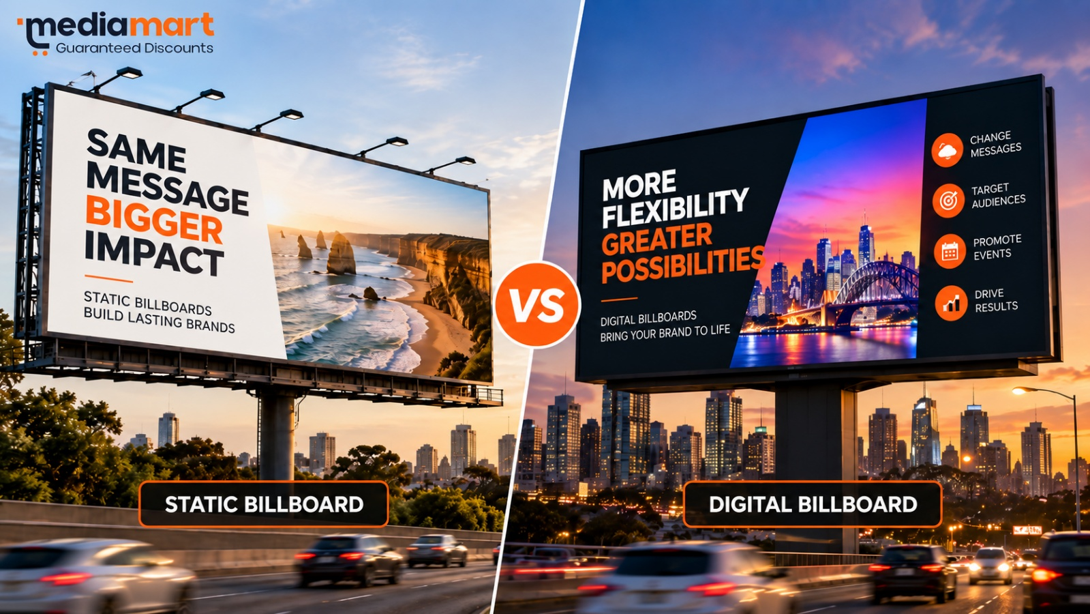
Choosing between a digital billboard and static billboard is not really about which technology is better. It is about what you need the billboard to do. Do you want one powerful message to stay visible consistently? Or do you need the flexibility to change your advertising during the campaign? Both formats can work well, but they solve different marketing problems.
If you are still building foundations, start with what billboard advertising is and the benefits of billboard advertising, then use this comparison to choose the format that fits your campaign job.
Static Billboard: Built for Consistency
A static billboard displays one advertisement throughout the booked campaign period. There are no rotating messages and no changing creative. Your campaign keeps the same visual presence in that location. This can make static billboards particularly useful when the goal is long-term recognition. They may suit campaigns such as:
- Property developments
- Local business branding
- New store openings
- Construction companies
- Long-term brand campaigns
- Simple product or service messages
For example, a property developer promoting: NEW HOMES NOW SELLING may not need the message to change every few days. The strength comes from people repeatedly seeing the same message.
Digital Billboard: Built for Flexibility
A digital billboard displays advertising electronically. Depending on the media placement, advertisements may rotate between several advertisers, while the creative can often be changed more easily than with printed outdoor advertising. This makes digital billboards useful when the campaign itself is changing. For example, a business could move from: COMING SOON to: NOW OPEN and later:
VISIT US THIS WEEKEND without replacing a physical billboard. That flexibility can be valuable for fast-moving campaigns.
Digital vs Static Billboard: The Key Differences
The easiest way to compare them is by looking at what each does best.
Static Billboard
Best when you need:
- One consistent message
- Continuous brand presence
- Longer campaign periods
- Simple, memorable creative
- Strong location-based awareness
Digital Billboard
Best when you need:
- Changing creative
- Multiple campaign messages
- Event or promotional advertising
- Seasonal campaigns
- Greater flexibility during the campaign
So the question is not simply: Digital or static? It is: Consistency or flexibility?
Choose Static When Repetition Is the Strategy
Some advertising works because nothing changes. Imagine a builder wants to become better known within a particular area. A static billboard displaying the company name, a strong image and one clear message every day can steadily reinforce that brand. People travelling the same route continue seeing it. The message becomes familiar.
In this situation, changing the creative constantly may not add much value. The repetition itself is doing the work.
Choose Digital When Timing Matters
Now imagine a restaurant, event company or retailer. Their advertising needs may change throughout the campaign. A restaurant might want to promote a new opening. An event organiser may need to highlight an upcoming date. A retailer may want to switch from a product launch to a seasonal promotion.
A digital billboard gives these businesses greater flexibility to adapt the creative when required. That makes digital particularly useful when timing is part of the message.
Does Digital Automatically Get More Attention?
Not necessarily. A digital screen may look impressive, but the format alone does not determine whether people will remember the advertisement. A strong static billboard with a brilliant headline in the right location can outperform a complicated digital advertisement that people struggle to understand. What really matters is:
Location
Can your audience see it clearly from the road or footpath where people actually pass?
Creative
Can people understand the message quickly enough for a short outdoor glance?
Relevance
Does the message matter to the people passing that location, or is it aimed at the wrong audience?
Frequency
Are people exposed to the brand often enough to remember it? Technology cannot compensate for weak advertising.
Think About How Much You Need to Say
Your message can also help determine the format. If your campaign can be communicated with one strong idea, a static billboard may be enough. A line like “THINKING OF SELLING?” does not necessarily need to change. But if the campaign includes several stages, services or promotions, digital advertising may provide more room to adapt. For example:
- Monday: New Collection Available
- Friday: Weekend Promotion
- Next Week: New Store Now Open
The business does not need to squeeze all three messages onto one billboard.
What About Cost?
Neither format should automatically be considered the cheaper or more expensive choice. The total investment can depend on factors such as:
- Location
- Campaign duration
- Billboard size
- Audience exposure
- Digital rotation or availability
- Static printing and installation
- Creative production
That means businesses should compare what they receive for the budget, rather than comparing digital and static based only on the quoted price. A more relevant billboard can be better value even if the placement itself costs more.
Can a Campaign Use Both?
Yes. A business does not necessarily need to choose one format for its entire outdoor strategy. For example, a company could use both formats for different jobs:
- Static billboard: for long-term brand recognition
- Digital billboard: for launches, promotions or changing campaign messages
The static placement creates consistency while digital advertising adds flexibility. Used strategically, the two formats can complement each other.
A Simple Way to Choose
Before deciding, ask yourself three questions that separate brand consistency from message flexibility.
Will the message stay the same?
If yes, a static billboard may be a good fit for consistent brand presence over a longer period.
Will the campaign need different messages?
If yes, consider a digital billboard so the creative can change as the campaign evolves.
Is the location right for our audience?
If the answer is no, neither format will solve the problem. Location should still come before technology.
Cost Considerations When Comparing Formats
Digital billboard vs static billboard pricing is not a simple cheaper-or-dearer contest. Static often includes continuous presence plus printing and installation. Digital often reflects share of screen time, frequency and how easily creative can change.
Compare what exposure and flexibility you receive, not only the headline fee. For a fuller budgeting framework, read how much billboard advertising costs in Australia before you judge either format on price alone.
When Businesses Combine Digital and Static
Many brands use both: static for long-term recognition on key routes, and digital for launches, events or rotating offers. The formats then reinforce each other instead of competing for the same role.
City campaigns often mix approaches across markets - see Sydney, Melbourne, Brisbane digital billboards and Auckland for local planning context.
When you need flexible digital inventory, explore digital billboard advertising. Keep creative simple in both formats so people can understand the message in a few seconds.
How Format Choice Fits Wider Marketing
Format decides how the outdoor message behaves. Your wider plan decides what happens next. Align billboard creative with website copy, SEO and Google Ads so recognition has a clear path to enquiry.
If you are weighing outdoor against other channels, choosing marketing channels can help place digital and static billboards inside a broader media mix rather than treating them as isolated buys.
Frequently Asked Questions About Digital vs Static Billboards
Which is better: digital billboard or static billboard?
Neither is universally better. Choose static for consistency and repeated recognition. Choose digital for flexible creative and timed promotions. Location and message quality still matter more than the screen technology.
Is digital always more expensive than static?
Not automatically. Cost structures differ. Compare exposure, duration and production using billboard advertising cost in Australia rather than assuming one format is always the premium option.
Can I run digital and static in the same campaign?
Yes. Many businesses keep a static board for ongoing brand presence and use digital for changing offers. That combination can cover both recognition and timely messaging.
Does format matter more than location?
Usually no. A weaker location with impressive technology still underperforms a relevant site with clear creative. Choose audience fit first, then digital or static.
Where can I see city-specific outdoor examples?
Browse Sydney, Melbourne, Brisbane and Auckland for market-specific planning notes.
So, Which Is Better?
There is no universal winner in the digital vs static billboard debate. Choose static when your campaign needs consistency and repeated recognition. Choose digital when your campaign needs flexibility and changing creative. And before choosing either, make sure the billboard is positioned where the people you actually want to reach are likely to see it.
Static keeps the message consistent. Digital keeps the message flexible. The right strategy decides which one wins. Media Mart helps businesses across Australia and New Zealand explore static and digital billboard advertising options based on campaign objectives, audience, location and creative requirements.
When you are ready to brief placements, talk to Media Mart about digital billboard advertising and keep SEO aligned so whichever format you choose can turn outdoor awareness into searchable demand.