
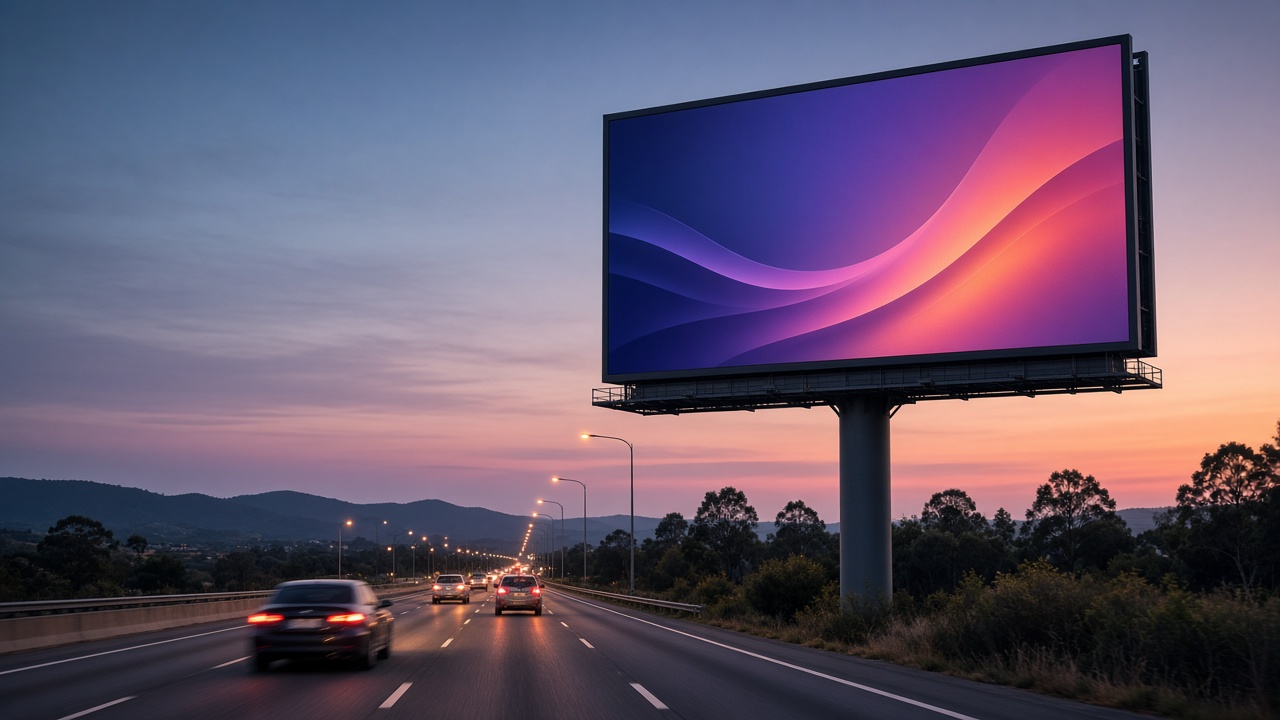
Out-of-home advertising - often shortened to OOH - is advertising people encounter outside the home. That includes billboards, street furniture, transit displays and other place-based formats that meet audiences while they travel, commute or spend time in public spaces.
Unlike channels that rely on a screen someone chooses to open, OOH appears in the physical environment. This guide explains how out-of-home advertising works, which formats businesses use, and how outdoor can support digital marketing rather than sit apart from it.
What Counts as Out-of-Home Advertising?
OOH is the broader category. Common formats include:
- Large roadside and urban billboards
- Digital billboard screens
- Street furniture such as bus shelters and panels
- Transit advertising on buses, trains and related environments
- Place-based displays near retail, venues or high-footfall precincts
Billboards are one of the most recognised OOH formats, but they are not the whole category. For a focused look at boards specifically, see what billboard advertising is and how it works.
How Out-of-Home Advertising Works
An OOH campaign typically follows a practical path:
- Define the audience and campaign objective
- Choose formats and locations that match where that audience moves
- Create a message that can be understood quickly
- Run the campaign for a planned period
- Support outdoor visibility with online follow-through where useful
The strength of OOH is repeated exposure in relevant places. Someone may pass the same site on a daily commute. Over time, the brand becomes familiar - which can later influence search behaviour and choice.
Why Message Simplicity Matters
People usually see outdoor ads in motion. They may be driving, walking or waiting briefly. That means effective OOH creative often relies on:
- One main idea
- Large, readable text
- Strong visual focus
- Clear branding
- A simple next step such as a search term, URL or offer cue
Trying to explain everything on one panel usually reduces impact. Outdoor works best when it makes people notice and remember, then continue the journey online or in-store.
Static and Digital Outdoor Formats
Static formats hold one printed creative for the booking period. They suit steady brand presence and simple, enduring messages. Digital formats use screens that can rotate creatives and update campaigns more flexibly.
Neither is automatically better. Choice depends on whether you need continuous presence of one message or the ability to refresh offers, events and seasonal creative. Compare approaches in digital billboard vs static billboard and explore digital billboard advertising options.
Transit and Movement-Based OOH
Transit advertising places messages where commuters travel - on or around public transport environments. It can suit brands that want repeated exposure along everyday routes rather than only fixed roadside sites. Media Mart's public transit overview covers how those placements fit a wider outdoor mix.
How OOH Supports Digital Marketing
Outdoor and digital often work as a sequence:
- OOH builds awareness in the real world
- People later search the brand or category online
- SEO, ads and social capture that interest
- The website explains the offer and converts enquiry
When branding is consistent across outdoor and online, recognition transfers more easily from street to screen.
Planning Considerations for Businesses
Before booking OOH, clarify:
- Who you need to reach and where they travel
- Whether the goal is awareness, launch support or local presence
- Which format fits the message and update needs
- How creative will stay readable at a glance
- How online channels will catch follow-up interest
Pricing varies by market, format, location and duration. For billboard-focused planning context, see how much billboard advertising costs in Australia.
Creative Production and Brand Consistency
Outdoor creative has production constraints: viewing distance, lighting, dwell time and format size all affect design. A logo that works on a website may need simplification on a roadside panel. Colours must remain legible in daylight. Copy must survive a glance.
Keep brand elements consistent with your online presence so people who see the board can recognise the same organisation later in search or on social. That transfer of recognition is one of the practical benefits of pairing OOH with digital marketing.
Measuring Outdoor in a Realistic Way
OOH is often strongest as an awareness and memory channel. Measurement may include opportunity-to-see estimates from the media owner, branded search interest during the campaign, landing page activity, store visits where trackable, and qualitative feedback from customers who mention seeing the creative.
Avoid forcing outdoor into the same last-click logic used for some digital channels. Evaluate it against the job it was booked to do - usually presence and recall - while still connecting it to digital follow-through where possible.
Choosing Locations with Intent
Location selection should follow audience movement, not only prestige. Ask where your customers travel, shop, commute or wait. A relevant suburban corridor can outperform a famous but mismatched site. The same principle applies to transit routes and precinct displays.
Visit candidate environments where practical. Notice sightlines, clutter, approach speed and nearby competitors. Those details influence whether your message can land cleanly.
Integrating OOH with Campaign Calendars
Outdoor works especially well when timed with other activity - a website refresh, a product launch, a seasonal peak or a search campaign that can catch branded queries. Align creative themes so the board, the ad and the landing page feel like one story.
Give yourself production lead time. Artwork approval, print or digital trafficking, and installation schedules can take longer than social posts. Build that buffer into campaign planning so the outdoor flight does not miss the moment it was meant to support.
Who Typically Uses Out-of-Home
OOH is used by a wide mix of organisations: local service brands, retailers, hospitality, property and development teams, automotive businesses, education providers, events and public information campaigns. The common thread is a need to be seen in physical space by a defined audience.
Scale can vary. Some campaigns book a single high-relevance site. Others build networks across corridors or transit routes. Fit the footprint to the marketing job rather than assuming bigger always means better. The right question is not "what is the largest board available" but "which placement puts our message in front of the people we actually need to reach".
When Out-of-Home Makes Sense
OOH can suit businesses that need physical presence in a corridor, suburb or city - from local services to larger brand campaigns. It is especially useful when you want familiarity to build through everyday exposure, then support that recognition with a strong digital path so people who notice you outdoors can find you online without friction.
If you are exploring outdoor options across billboards and transit, Media Mart can help map formats to audience and location through digital billboard advertising and public transit placements.
Frequently Asked Questions
What is out-of-home advertising?
It is advertising encountered outside the home - including billboards, street furniture, transit media and other public-place formats.
Is OOH the same as billboard advertising?
No. Billboard advertising is a major part of OOH, but out-of-home also includes transit, street furniture and other place-based displays.
How does out-of-home advertising work with digital channels?
Outdoor builds awareness and recall. People may later search or engage online, where SEO, ads, social and your website can continue the conversation.
What makes a good OOH message?
A single clear idea, readable design, strong branding and a message people can absorb quickly while moving through a location.
Do small businesses use out-of-home advertising?
Yes, when location and format match a local audience. Many campaigns focus on relevant routes or precincts rather than only the largest city sites.