
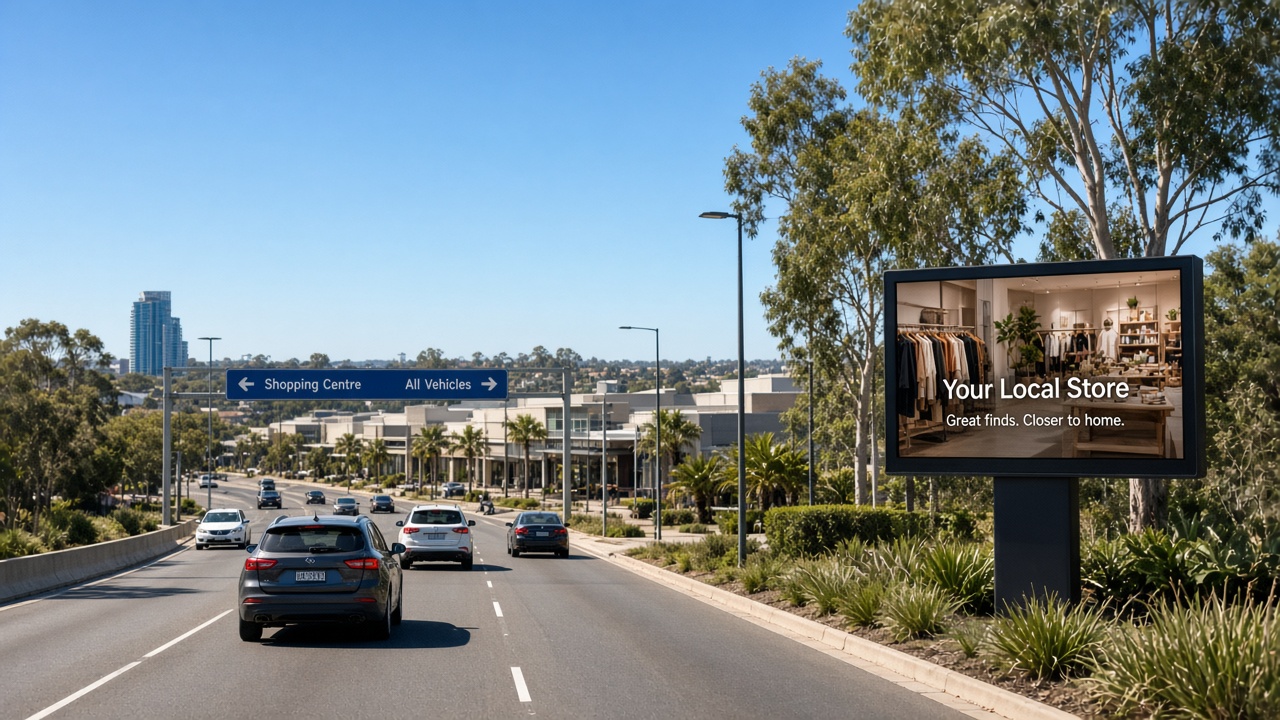
Main-street retail in Australia does not look like it did before hybrid work. Lunchtime rushes thinned in some CBDs. Suburban centres absorbed more weekday life. Shoppers still buy; they just arrive from different patterns, on different roads, at different hours.
For local retailers, the foot traffic war in 2026 and 2027 is not won by shouting louder online. It is won by intercepting the journeys people already make: school runs, suburban commutes, weekend retail loops and the last few kilometres before a store car park.
This guide is a practical roadmap for store owners in Sydney, Melbourne, Brisbane and Perth who want drive-by audiences to become walk-ins, using hyper-local placements and proximity-based digital billboards.
Why Foot Traffic Feels Harder Than It Used To
Hybrid working changed where people spend midweek time. Fewer five-day CBD commutes means some city strips see softer weekday trade, while neighbourhood centres and arterial retail parks pick up more everyday movement.
At the same time, customers are more distracted. They plan trips on their phones, compare prices before they leave home, and only “pop in” when a store already sits in their mental map of the area.
That is why empty-looking footpaths can coexist with busy roads one suburb over. The traffic did not disappear. It redistributed. Retailers who still advertise as if everyone streams past the old main street miss the new paths.
Winning Walk-Ins From Drive-By Traffic
Drive-by traffic only helps if three things line up: the right road, a message people can read at speed, and a store they can reach soon after.
Proximity-based outdoor works because it shortens the gap between seeing and visiting. A board five corridors away from your catchment builds brand. A board on the approach to your centre builds a trip.
Strong retail outdoor usually does one job:
- Remind locals you are open and nearby
- Push a single reason to visit this week
- Point people toward a centre, street or landmark they already know
Leave catalogues, full menus and fine print for the window or website. Roadside creative that tries to explain everything explains nothing.
Hyper-Local Targeting Beats City-Wide Noise
National creative and broad digital reach rarely fix a quiet Tuesday. Suburban retailers need hyper-local thinking: which intersections feed your car park, which bus routes serve your strip, which competing centres steal your weekend trade.
Before you book anything, sketch a simple catchment map:
- Where do customers say they live?
- Which roads do they use to reach you?
- Where do they shop if they do not choose you?
- Which digital screen sits on that path, not merely in the same city?
Hyper-local is not “smaller budget.” It is tighter geography. One well-chosen proximity site can outperform three prestige sites your customers never drive past.
Sydney: Capture Corridor Retail, Not Just the CBD
Sydney retail success often sits along corridors and suburban hubs rather than a single city spine. Northern, southern, western and inner-west catchments each have their own commute and shopping rhythms.
For Sydney store owners:
- Prioritise boards on the approach roads to your centre, not only harbour-facing inventory
- Lean into evening and weekend creative when hybrid workers shop closer to home
- Use suburb or centre names locals recognise (“near Hornsby,” “at Eastgardens”) when space allows
For city detail, read our guide to billboard advertising in Sydney.
Melbourne: Turn Tram, Road and Centre Approaches Into Trips
Melbourne’s retail geography mixes strip shopping, large centres and arterial roads. Hybrid patterns strengthened many local strips while making CBD-dependent trade less predictable.
For Melbourne retailers:
- Match placements to how your customers actually arrive: car approaches, major roads feeding a centre, or high-walk strips where outdoor still primes a later visit
- Keep offers simple for cold-weather and weekend peaks when suburban shopping concentrates
- Coordinate outdoor with in-store readiness: stock, staffing and a clear entry offer
For city detail, read our guide to billboard advertising in Melbourne.
Brisbane: Own the Suburban Shopper’s Weekly Loop
Brisbane’s spread-out layout rewards retailers who understand weekly loops (work, school, sport and large centre visits) more than one dense pedestrian core.
For Brisbane store owners:
- Book digital screens on routes into your trading centre, not only city-fringe prestige
- Use day-parting for after-school and Saturday morning creatives when family retail peaks
- Reinforce “easy to get to” messaging, because convenience often beats novelty in a sprawling metro
For city detail, read our guide to digital billboard advertising in Brisbane.
Perth: Make Distance Feel Smaller With Approach Media
Perth shoppers often travel further between home, work and retail. That can hurt impulse footfall, or help retailers who claim the roads people use to cross the metro.
For Perth retailers:
- Treat approach corridors as your showroom window
- Focus on repeated exposure for households in your true drive-time radius
- Pair outdoor with clear centre or street cues so “I’ve seen them” becomes “I know where to go”
The same proximity logic applies in every capital: buy the journey, not the skyline.
A Four-Week Foot Traffic Playbook
Week 1: Diagnose
Count quiet vs busy periods. Note which directions customers arrive from. List the three roads that matter most.
Week 2: Place
Shortlist proximity digital billboard options on those roads. Reject sites outside your walk-in radius even if traffic counts look impressive.
Week 3: Creative
One headline, one offer or brand cue, high contrast, store or centre identifier. Prepare a matching landing page or Google profile update.
Week 4: Activate and observe
Launch. Track door counts, “how did you hear about us,” branded search and redemption of a board-only offer code or phrase if you use one.
Repeat monthly. Foot traffic campaigns compound through familiarity; one week is rarely enough to judge a corridor.
Creative That Turns Heads Into Visits
Retail outdoor fails when it looks like a brochure. It works when it behaves like a signpost.
Use:
- A single product hero or lifestyle image
- Short verbs: Open, This weekend, Extra hours, New season
- Centre or suburb proof of nearness
- Digital rotation for weekday vs weekend without changing your brand colours
Avoid stacking multiple discounts, QR codes that cannot be scanned at 60 km/h, and tiny body copy.
For format choice, see digital vs static billboards, and for cost context see how much billboard advertising costs in Australia.
Measuring Footfall Without Guesswork
You will not get perfect click-style attribution from a roadside screen. You can still measure like a retailer:
- Door counters or POS time-of-day comparison vs prior weeks
- Staff tallies of “saw your board” mentions
- Uptick in directions requests and calls during flight dates
- Redemption of a unique offer line used only on outdoor
If nothing moves after sustained proximity exposure, reassess the site or the offer before blaming the whole channel.
Frequently Asked Questions
Can outdoor help if my shop is inside a shopping centre?
Yes, especially on the roads and approaches that feed that centre. The board’s job is to put your store on the trip list before people arrive and default to habit brands.
Should I advertise in the CBD if my store is suburban?
Only if CBD workers are a real customer base. Many suburban retailers waste budget on city inventory their shoppers never see on shopping days.
How is this different from running more social ads?
Social can retarget and promote. It does not own the physical approach to your centre. Foot traffic wars are won on the journey as much as in the feed.
Do I need different creatives for Sydney vs Perth?
Brand can stay consistent. Place names, centre cues and offer timing should reflect local shopping rhythms and geography.
Final Thoughts
From Sydney to Perth, retailers who win the foot traffic war in 2026 and 2027 treat hybrid work as a map change, not a mystery. Main-street patterns shifted; drive-by opportunity did not vanish.
Hyper-local, proximity-based digital billboards help suburban stores meet customers on the roads they still use, then turn recognition into walk-ins with simple creative and a store ready to convert the visit.
Media Mart can help your store find digital billboard advertising placements on the approach roads that matter, based on your catchment and campaign goals.