
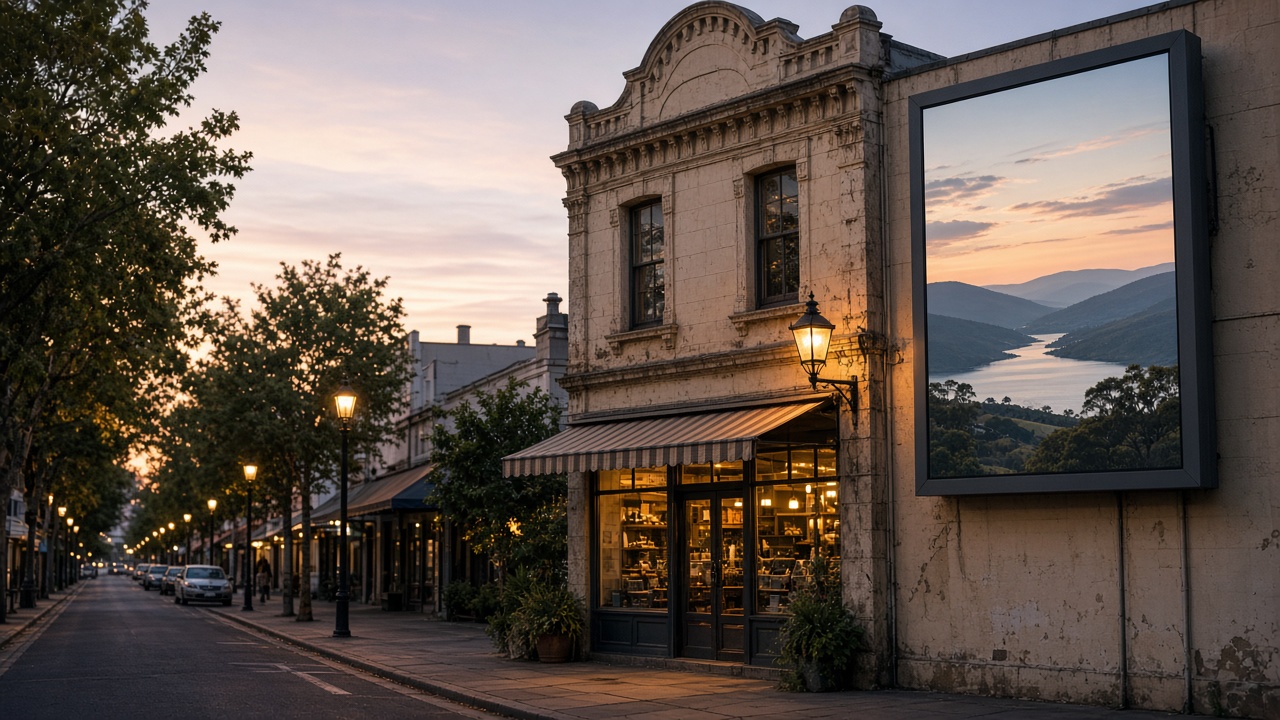
Australian main street shops live or die on whether locals choose them, not on a marketplace tab or the next sponsored result. In 2027, that choice is shaped as much by trust and familiarity as by who ranks first for a generic keyword.
Across many strips and neighbourhood centres, street-level branding is outperforming a search-only mindset. Not because Google disappeared, but because shoppers are tired of algorithm-driven phone ads, sceptical of what they see in-feed, and more likely to believe a business that occupies real space in their suburb.
This trend piece unpacks that psychology, and explains why large-format roadside digital screens carry a prestige and trust signal that search text rarely matches.
The 2027 Shopper Is Ad-Sceptical
Consumers have spent years training themselves to skip, mute and distrust paid units on their phones. Sponsored labels are noticed instantly. Retargeted ads feel invasive. Identical creatives from three competitors blur together.
For a main street florist, bottle shop, clinic, boutique or café, that scepticism is costly. You can win the auction and still lose the feeling of being a “real local.” People may click, compare and bounce, without ever building the warmth they get from seeing a shop as part of the streetscape.
Street-level branding works on a different contract. It does not follow the shopper from app to app. It simply exists in the shared environment. That publicness reads as commitment: this business is here, invested, accountable to neighbours.
Screen Fatigue Favours Physical Presence
Phone fatigue is not only about ads. It is about total screen load: work chat, news, social, payments, maps. By evening, another glowing rectangle asking for attention has less emotional room.
A roadside or approach digital board still uses a screen, but the context changes. It is large, shared and tied to place. It competes with the street, not with twenty other notifications. For branding (as opposed to deep product specs), that environment can feel less exhausting and more memorable.
Main street operators who only fund more mobile impressions often intensify the fatigue they are trying to break through. Operators who fund presence on the journey to the strip add a memory layer outside the phone.
What “Street-Level Branding” Means for Shops
Street-level branding is the set of signals that make a shop feel established in physical space: façade, signage, window presence and, increasingly, nearby out-of-home that carries the same identity at scale.
For 2027 main street strategy, the useful definition is:
- Visible in the suburb’s everyday paths
- Consistent with the shop’s name and look
- Built for recognition first, transaction second
- Credible because it is public and hard to fake cheaply at large format
A boosted post can be bought by anyone with a card. A well-kept main street presence plus a serious large-format board signals staying power. That prestige effect is psychological, not mystical: people associate costly, visible local presence with legitimacy. For brand foundations, see what branding is.
Why Physical Branding Beats Algorithm Ads on Trust
Trust for local shops is built through cues like:
- “I’ve seen them around here for a while”
- “They look like a proper store, not a pop-up listing”
- “Their name matches what I pass on the way to work”
Algorithm ads optimise for whoever pays and whoever clicks. They do not automatically confer neighbourhood status. In fact, heavy promo creative can make a shop feel interchangeable with national delivery brands fighting for the same thumb.
Large-format digital outdoor flips the cue set. Scale implies investment. Location implies local relevance. Repetition on a commute implies permanence. Those cues support trust before the customer types a query.
Search still matters when intent is hot. Street-level branding matters when preference is forming.
Where Digital Search Still Wins (And Should Stay Funded)
This is not a eulogy for search. Search outperforms street-level media when someone already knows what they need and is choosing among options right now: opening hours, “near me,” product availability and reviews.
Main street shops should keep:
- Accurate Google Business profiles and SEO hygiene (our search engine optimisation team can help)
- Strong branded search coverage so people who saw the board can find the door
- Selective Google Ads where non-brand intent still converts profitably
The 2027 mistake is treating search as the entire brand system. The winning pattern is street-level branding for trust and preference, and search for capture.
The Prestige of Large-Format Roadside Screens
Human brains treat size and placement as social information. A big, sharp digital face on a known road reads closer to “landmark brand” than a small sponsored tile between holiday photos.
For main street shops, prestige does not require looking luxury. It requires looking intentional:
- Clean creative with confident typography
- Identity that matches the façade
- Suburb or strip cues that feel native
- Restraint: one idea, not a catalogue
Cheap-looking outdoor can reverse the effect. Prestige comes from craft and fit, not from simply being digital. For spec and cost context, see how much billboard advertising costs in Australia and what billboard advertising is and how it works.
A Practical Trust Stack for Main Street 2027
- Façade and window: on-street proof of life
- Approach outdoor: large-format recognition on the paths to your strip
- Consistent naming: board, awning, Google profile and website title
- Search capture: be findable the moment trust turns into intent
- In-store experience: deliver what the branding promised
If step 5 fails, no media channel will save the reputation. Branding only amplifies what the shop already is.
Who This Trend Suits Most
Street-level branding outperforms a search-only approach when:
- Customers can physically visit
- Purchase is influenced by local habit and trust
- Competitors all look similar in Maps and paid results
- The shop benefits from feeling like part of the suburb’s furniture
It suits less when the business is purely online, nationally shipped, or so specialised that buyers research deeply before any local cue matters.
Frequently Asked Questions
Is search advertising dying for local shops in 2027?
No. Preference-building through street-level branding is rising in importance. Search remains the closer for many trips. The shift is in sequence and budget balance, not elimination.
Can a small boutique really benefit from large-format digital?
Yes, when the face sits on a true approach path and creative stays elegant and clear. One relevant site beats scattered vanity inventory.
How is this different from ordinary “brand awareness”?
It is place-based trust. The goal is not nationwide fame. It is being the shop locals already believe in when they need what you sell.
Will more phone ads fix screen fatigue?
Usually not. They add to the load. Presence outside the phone is often the clearer path to feeling human and local again.
Final Thoughts
In 2027, Australian main street shops compete in a climate of digital scepticism and screen fatigue. Algorithm-driven phone ads can still generate visits, but they struggle to manufacture the trust that physical local branding creates in public space.
Street-level branding, amplified by the prestige of large-format roadside digital screens, outperforms a search-only mindset where preference and neighbourhood credibility decide who gets the walk-in. Keep search sharp for capture. Build the belief on the street.
Media Mart helps Australian businesses explore digital billboard advertising options that put your brand on the roads your customers already travel.