
Australian small businesses entered 2026 with less room to get marketing wrong. Domestic spending has been subdued in many categories, wage and rent costs remain elevated, and profit margins leave little buffer for campaigns that look busy but do not bring customers closer to the door.
For retailers and service providers, the challenge is not only efficiency. It is presence. When shoppers take longer to decide and compare more carefully, brands that feel familiar in the local environment often hold an advantage over brands that only appear in a feed.
This reality check looks at the margin pressure facing Australian SMEs, and how physical presence along major commuter corridors can support trust, recognition and drive-to-store conversions when every dollar has to work harder.
The 2026 Margin Reality for Australian SMEs
Margin squeeze rarely comes from one source. Many owners are absorbing higher operating costs while customers remain cautious with discretionary spend. That combination compresses the gap between revenue and profit.
In practical terms, it means:
- Acquisition costs feel harder to justify when conversion is slower
- Discounting to win sales can erode the margin you were trying to protect
- Cutting all visibility can quietly reduce demand even further
Marketing does not fix input costs. It can, however, protect the flow of local customers that keeps revenue moving when the market is soft. The businesses that manage this period best usually stay visible in a focused way: not louder everywhere, but clearer where their customers already are.
Related pressure themes also show up in cost articles such as rising fuel costs and small business marketing.
Why Subdued Spending Makes Local Trust More Important
When households tighten spending, purchase decisions become more deliberate. People still buy essentials, book services and visit nearby stores, but they often choose businesses that already feel known and convenient.
Online ads can introduce an offer. They do not always create the same sense of local legitimacy. A brand that appears repeatedly on the routes people travel to work, school and shopping can feel established before the customer ever searches or clicks.
That familiarity matters in a cautious economy. Trust reduces friction. If two options look similar on price, the business that already sits in the customer’s mental map of the neighbourhood often wins the visit.
Physical Presence Along Commuter Corridors
Everyday commute routes are one of the most underused assets in local marketing. Arterial roads, suburban approaches and retail corridors carry the same audiences week after week.
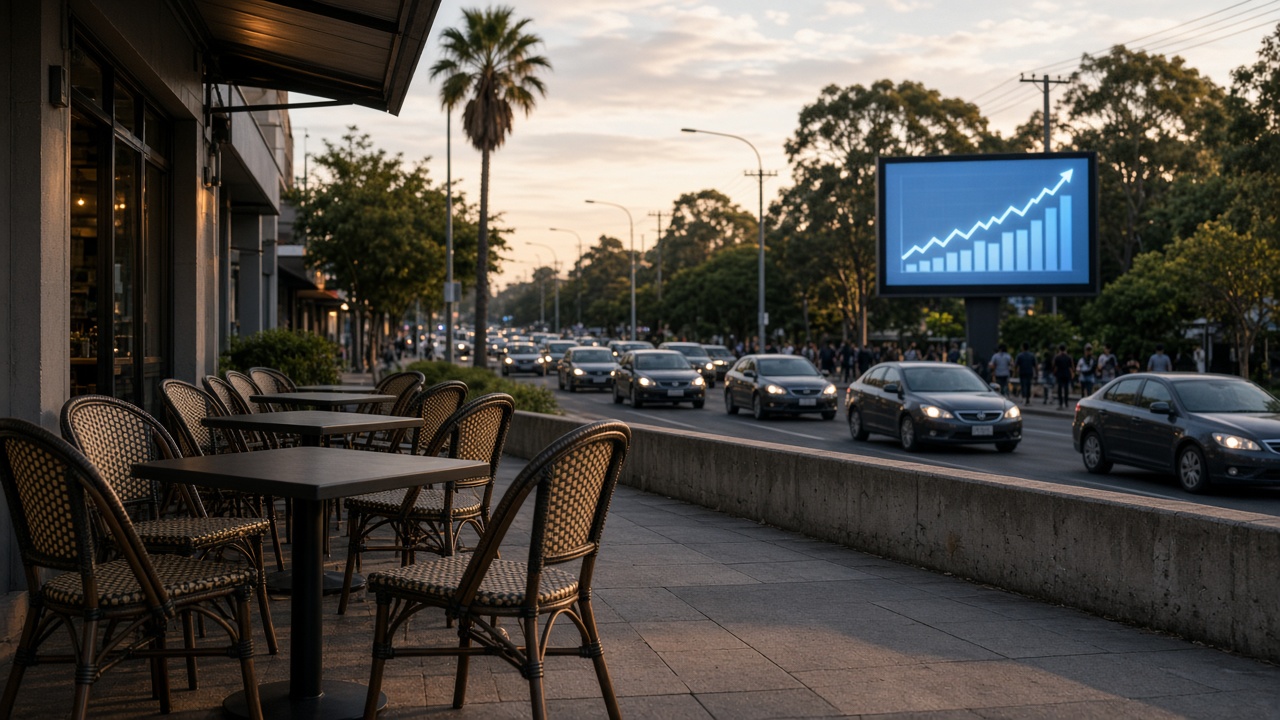
For Australian retailers and service businesses, those corridors are where local visibility becomes tangible. A high-resolution digital screen on a familiar route can put your name, offer or location cue in front of people during ordinary travel, not only during an app session.
This is the core outdoor opportunity for margin-sensitive businesses: you are not buying abstract reach. You are buying repeated exposure in the geography that can actually walk in, call or book.
Explore format options through digital billboard advertising, and see how city corridors work in practice in Sydney, Melbourne and Brisbane.
How Local Visibility Supports Drive-to-Store Conversions
Drive-to-store and walk-in outcomes matter most when online metrics alone do not reflect real trading conditions. A click is not a customer in the aisle. A view is not a booked job.
Outdoor local visibility supports conversion in a different sequence:
- The customer sees your brand on a regular route
- Recognition builds through repetition
- When a need appears, your business already feels familiar
- They search, navigate or visit with less hesitation
That path works especially well for retail, hospitality, health, automotive, trades and neighbourhood services, which are categories where the final action is local.
Keep creative simple enough to land at road speed: one message, strong branding, and a clear reason to visit or enquire. Leave detail for the website, staff or listing.
High-Resolution Screens and Everyday Commutes
Digital out-of-home gives small businesses a practical way to stay present without reprinting every offer. Screens can hold a steady brand message, then rotate shorter promotions for weekends, seasonal peaks or clearance windows.
For margin-conscious owners, that flexibility helps protect against waste. You can keep a core awareness creative in market and adjust secondary messages when trading conditions change, without rebuilding the whole campaign from scratch.
The strongest placements are usually those your customers already travel, not the most prestigious site on a map. Relevance beats vanity when budgets are tight. For cost context, see how much billboard advertising costs in Australia.
What to Protect When Margins Are Tight
In a squeeze period, cut activity that creates motion without demand. Protect the assets that turn recognition into revenue:
- A clear website and contact path
- Accurate local listings and search presence
- Paid channels that still deliver qualified enquiries, including Google Ads where they earn their keep
- Local awareness that keeps your brand in the catchment conversation
Outdoor works best as the familiarity layer. Digital tools then capture the enquiry. For channel planning, see choosing the right marketing channels.
A useful test before any booking: if a neighbour saw your brand three times this week on their commute, would they know what you do and where to find you? If not, simplify the message before you spend.
A Practical Local Visibility Checklist for 2026
Use this as a quick reality check before you reallocate budget:
- Do most customers come from a defined set of suburbs or corridors?
- Has online acquisition become more expensive while store or booking volume stayed flat?
- Is your offer clear enough for a roadside message?
- Can you support outdoor with a findable website, phone number or Google profile?
- Are you measuring calls, visits, branded search and in-store feedback, not vanity metrics alone?
If most answers are yes, local outdoor visibility deserves a serious place in the mix. If your customers are highly specialised or almost entirely remote, keep the focus on efficient digital conversion instead.
Frequently Asked Questions
Does local visibility still matter when consumers are spending less?
Yes, and often more. Cautious buyers lean toward familiar, convenient options. Being present on local routes helps your business stay in consideration when people do spend.
Is outdoor advertising too expensive for small businesses under margin pressure?
Not always. The better question is catchment fit and creative clarity. A relevant local placement can be more efficient than national or broad social reach that never converts nearby. Compare options carefully and start with a defined booking period.
Should retailers cut discounts or cut marketing first?
Indiscriminate discounting can damage margins permanently. Targeted visibility that brings in full-price or higher-quality demand is often the healthier lever, provided the offer and location are right.
How do digital billboards help if people still need to search later?
Outdoor builds recognition first. Search, SEO and your website complete the journey when the customer is ready. Consistent naming across the board and your online presence makes that handoff easier.
Final Thoughts
The 2026 Australian small business reality check is uncomfortable but clear: margins are tighter, spending is more careful, and inefficient awareness is harder to justify.
Local visibility will not remove cost pressure. It can strengthen the one advantage many SMEs still control: being known in the places their customers already travel. High-resolution digital screens on everyday commute routes give retailers and service businesses a practical way to build trust and support drive-to-store behaviour when online attention alone is not enough.
If you are weighing up where to place your next advertising dollar, Media Mart can help you explore digital billboard advertising options that match your catchment and budget.