
Forecasts change. So do offers, weather, stock levels and weekend trading plans. Traditional outdoor, printed, posted and locked for the term, was built for a slower calendar.
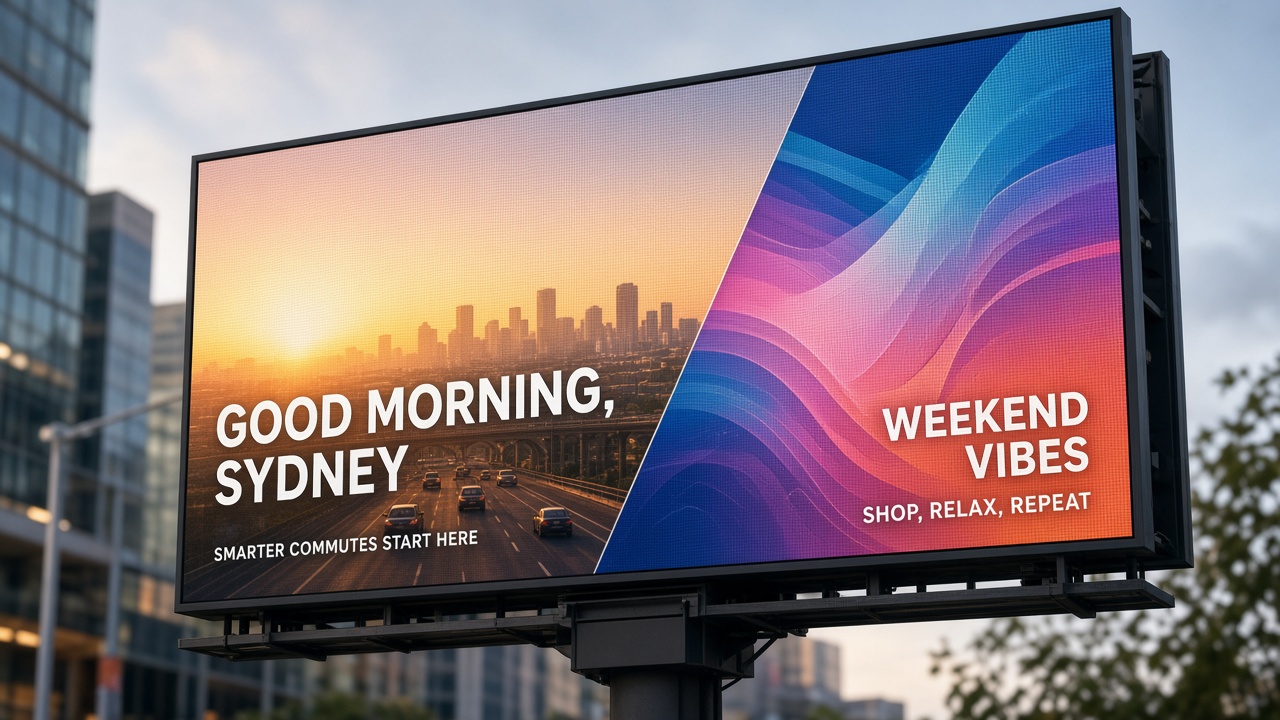
Dynamic digital billboards give Australian businesses a different operating rhythm. Creative can be swapped without a print run. Schedules can favour the morning commute, the Friday evening drive or a weekend retail push. When the week shifts, the screen can shift with it.
This article is about that agile edge: what “dynamic” actually means on a roadside screen, where day-parting helps, and how to plan flexible outdoor without turning your brand into a blur of constant noise.
The Problem With Rigid Outdoor
Static campaigns still work when the message should stay constant for months, such as a brand line, a location cue or a long-running promise. Friction appears when the business moves faster than the print cycle.
Typical drag from traditional outdoor:
- Artwork locked early to meet print and install deadlines
- Cost and waste if the offer expires mid-flight
- No clean way to run a weekday message and a weekend message on the same face
- Slow reaction when weather, stock or events change demand
If your marketing team already works in sprints online, printed boards feel like the one channel that cannot keep up. Dynamic digital inventory closes that gap.
For a straight format comparison, see digital vs static billboards.
What “Dynamic” Means on a Digital Billboard
Dynamic does not mean chaotic. It means the face can carry scheduled creative versions under rules you set with the media partner.
In practice, Australian advertisers use dynamism for:
- Day-parting: different creatives by time block
- Day-of-week plans: weekday service messaging vs weekend retail
- Campaign bursts: short promos inside a longer brand booking
- Rapid replacements: updating artwork when an offer changes, without reprinting
Some networks also support contextual triggers (for example weather-linked creative) where the technology and booking allow it. Treat triggers as an enhancement you confirm per site, not a universal promise on every screen in Australia. The reliable agile wins for most SMEs are still scheduling, fast creative swaps and zero print lead time.
Zero Printing Fees, Faster Launches
Print is not only a line item. It is a calendar tax: approvals, production, delivery, install. Miss a window and the offer is stale before it faces traffic.
Digital removes that production loop for screen-based campaigns. Once specifications are met, new creative can go live on a much shorter path. That is the “instant campaign launch” advantage in plain operator language: fewer dependencies between “offer approved” and “offer visible.”
Use that speed for:
- Flash trading weekends
- Event-week messaging
- Correcting a price or date without embarrassment
- Testing two headlines across a fortnight
Brand colours, logo clear space and legal lines should still be governed. Agility without brand rules becomes clutter.
Day-Parting: Matching Messages to the Clock
Day-parting is the clearest agile tool most local businesses will use.
Morning commute
Short, high-contrast creative. Service availability, “open today,” coffee and breakfast retail, appointment reminders, tradie call-now lines. People are time-poor; one idea only.
Midday and school run
Centre retail, family services, local appointments and “near you” cues.
Evening peak
Dining, entertainment, late opening hours, and automotive and home services for after-work calls.
Weekend
Retail promotions, open-inspection energy, leisure and hospitality. Swap the weekday corporate tone for visit-now language.
You are not required to fill every slot with a different ad. Many strong plans use one brand master plus one or two timed variants. Frequency of recognition still beats novelty for its own sake.
Morning Specials, Weekend Deals, Weather-Aware Offers
Common use cases map cleanly onto digital scheduling:
- Morning commute specials: show only in AM day-parts on corridor screens
- Weekend deals: switch Friday night to Sunday creatives without a reprint
- Weather-linked offers: where supported, lean into heat, rain or cool-change messaging with pre-approved alternate art
Build alternate creatives before you need them. Agility dies when legal and brand approvals start after the weather already changed.
Keep weather or timed offers honest and scannable. “Rainy day service slots open” beats a paragraph about seasonal conditions.
Planning an Agile Outdoor Calendar
Borrow a simple content calendar from digital teams:
- Master brand frame: always on, builds familiarity
- Promo slots: defined weeks or weekends only
- Day-part variants: only where the offer truly differs by time
- Kill dates: expired prices removed on time
Assign an owner for creative swaps the same way you assign someone to pause a paid social ad. Dynamic inventory without operational ownership just becomes outdated digital wallpaper.
Pair the screen with a landing path that matches the active offer, such as a site module, Google profile post or phone script. Related channel planning: choosing the right marketing channels.
Agile Does Not Mean Overstuffed
Digital slots are shared and dwell time is short. Loading six messages into a loop can dilute all of them.
Guardrails:
- One primary message per creative
- Large type, strong contrast, restrained logo lockup
- Limited characters; no brochure layouts
- Promo creative that still looks like the same brand as the master
If you need depth, send people to search or a short URL after recognition. Do not typeset the whole website onto the LED.
When Static Still Wins
Choose static (or a long unchanging digital brand cut) when:
- The goal is uninterrupted brand presence for a long flight
- The message will not change
- You want maximum simplicity operationally
Dynamic digital wins when offers, hours, events or audience moments change inside the booking. Many advertisers mix both philosophies: stable identity plus selective timed bursts. Cost context sits in how much billboard advertising costs in Australia.
Frequently Asked Questions
How quickly can creative be changed on a digital billboard?
It depends on the network’s lead times and approval process, but it is typically far faster than print-and-install cycles. Confirm turnaround when you book.
Is day-parting available on every digital site?
Not always in the same way. Ask which day-parts, share-of-voice and creative rotation rules apply to the specific face you want.
Can every board do weather-triggered ads?
No. Some environments support contextual triggers; others are schedule-based only. Plan weather creative as optional, pre-approved alternates.
Will constant changes confuse customers?
They can, if the brand look keeps shifting. Keep identity stable and change only the offer line or timed hook.
Final Thoughts
Flexibility in the forecast is no longer optional for Australian businesses that trade in weekly cycles. Rigid traditional outdoor still has a place for long brand holds, but it struggles when printing costs, delays and fixed artwork block fast moves.
Dynamic digital billboards restore agility: launches without print fees, day-parting for commute and weekend behaviour, and the option to refresh offers when the week demands it. Used with discipline, that is not restless marketing. It is outdoor that finally moves at the speed of the business behind it.
Media Mart can help you plan digital billboard advertising campaigns with the scheduling and creative flexibility your business needs.