
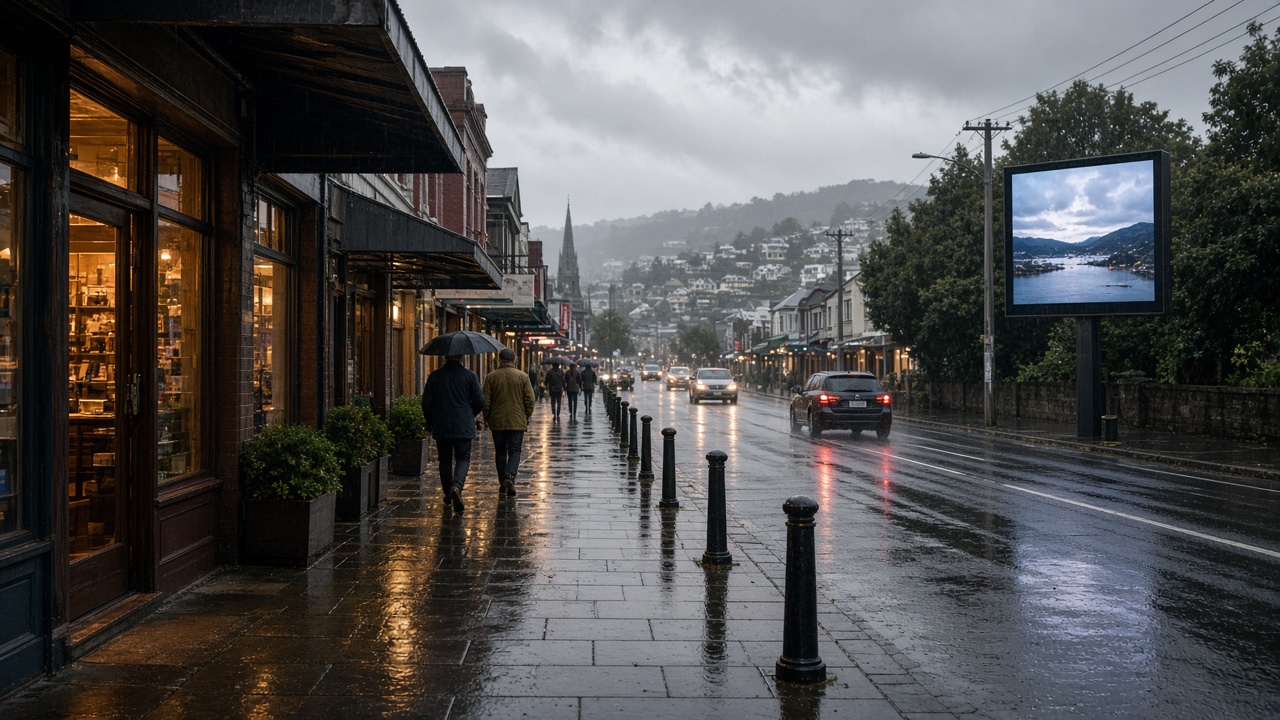
New Zealand's trading climate in 2026 and into 2027 still feels the hangover of high interest rates. Households are careful with discretionary spend. Landlords have not always matched that caution. Many Kiwi operators look at quieter floors and ask a blunt question: how do we get more people through the door?
For businesses with a physical premise, including retail, hospitality, clinics, showrooms and local services, the answer is not another vanity metric. It is foot traffic: visits and bookings that start with someone who saw you, recognised you, and chose to stop.
This guide is for local businesses across Auckland, Wellington, Christchurch and regional New Zealand who need high-impact visibility when consumer demand is subdued, and for how digital billboard advertising can act as a practical driver of store visits.
The NZ Economic Horizon in Plain Terms
“Soft demand” does not mean Kiwis stopped buying. It means purchases are delayed, compared harder, and pulled toward trusted, convenient options. Mortgages and rents still shape weekly budgets, and that hangover lasts longer than a single OCR headline.
In that environment, national-style digital noise often under-delivers for a suburban café, a Christchurch specialty retailer, a Wellington clinic or an Auckland trade counter. People still move to work, school, sport and shopping, but they spend with less impulse. Brands that stay present on those everyday routes remain candidates when a need appears. Brands that went dark to “wait out the economy” often find recovery slower, because preference shifted while they were invisible.
The horizon, then, is not only macroeconomic. It is geographic and behavioural: who still travels past your catchment, and do they know you exist?
Why Foot Traffic Is the Metric That Matters Now
Clicks can rise while the till stays flat. Impressions can look healthy while Tuesday lunch trade dies. For local NZ operators, prioritise outcomes tied to the premise:
- Door counts and booking volume by daypart
- Average spend on visit days versus quiet days
- Phone and form enquiries that convert to appointments
- Customer answers to “How did you hear about us?”
- Branded search and direction requests during outdoor flights
Digital out-of-home (DOOH) belongs in the plan when it supports those measures, not when it only decorates a media report. Treat outdoor as a visit engine: awareness on the road, conversion at the door.
Subdued Demand Changes What Creative Should Do
In a buoyant market, clever or witty outdoor can win on charm. In a careful market, clarity wins. Visitors need a fast reason to choose you now: open hours that help, a simple offer, a service they already need, or a centre or street they recognise. Overwritten creative wastes the only second you get at driving speed.
Strong foot-traffic creative usually includes:
- A clear business identity
- One message (offer, category or visit reason)
- A local cue (suburb, centre or landmark)
- High contrast and large type
Leave menus, full price lists and terms for the window, website or staff. The board's job is to create the stop; the premise's job is to complete it.
Auckland: Buy the Approach, Not Only the Skyline
Auckland's scale rewards corridor thinking. Customers often live, work and shop across different parts of the city. A prestige site that your buyers never drive does less for foot traffic than a screen on the arterial that feeds your centre.
Practical Auckland moves:
- Map the three roads that actually deliver customers to your door
- Prefer proximity to your trading hub over vanity inventory
- Align creative with suburban shopping rhythms, not only CBD weekday patterns
For more local detail, read our guide to billboard advertising in Auckland.
Wellington: Compact Geography, Precise Placement
Wellington's constrained layout can be an advantage. The right arterial or approach board can cover a meaningful share of relevant journeys without a huge multi-site buy.
Focus on:
- Routes into your suburban or city-fringe strip
- Messages that feel local, not generic national retail
- Consistency, because repetition builds trust in a close-knit market
Because distances are shorter, directional cues (“near…”, centre names) are especially useful for turning recognition into a short detour.
Christchurch: Suburban Roads and Rebuild Patterns
Christchurch retail and service geography leans on suburban centres and key roads as much as a single historic main street. Hybrid work and established suburban habits make roadside presence on those approaches a foot-traffic lever.
Use outdoor to:
- Stay visible on the weekly loops households already drive
- Support weekend and evening visit peaks with digital creative swaps where useful
- Reinforce that your business is part of the city's everyday map
Further reading: outdoor advertising in Christchurch.
Regional New Zealand: Highways and Town Entries
Outside the main metros, state highway approaches and town-entry sites often matter more than leftover “CBD prestige” panels with little relevance to your customers. Regional Kiwi businesses win when travellers and locals see a clear, professional presence on the way in, including fuel, food, services, retail and tourism-adjacent offers.
Keep the promise honest: only advertise what the visitor can get when they stop. Soft demand punishes overclaim faster than boom times do.
How DOOH Drives Physical Store Visits
Digital screens connect subdued demand to real visits when five things line up:
- Catchment fit: faces on roads your buyers use
- Frequency: enough days in market for recognition to stick
- Simple creative: one reason to visit
- Operational readiness: stock, roster and phone answered
- Matched digital presence: Google profile, hours and website aligned with the board
Digital formats help when offers or hours change without a reprint cycle, which is useful when you are testing what actually lifts the door count. For format context, see digital vs static billboards and what billboard advertising is.
Outdoor will not erase interest-rate pressure. It can keep your business on the shortlist when households do spend, which is the practical definition of navigating this horizon.
A 30-Day Foot Traffic Plan for Kiwi Operators
- Week 1: List quiet versus busy periods. Note arrival directions. Circle the corridors that feed your premise.
- Week 2: Shortlist proximity digital billboard options on those corridors and reject off-catchment vanity sites.
- Week 3: Lock one creative, update your Google hours and offer to match, and brief staff on the campaign line.
- Week 4: Go live. Track door counts, enquiries and “saw your board” mentions against the prior month.
Extend beyond 30 days if the site is right, because familiarity compounds. One quiet wet week is not a full test.
Frequently Asked Questions
Is outdoor worth it when NZ consumers are spending less?
It can be, when placement matches your real customers and creative gives a clear visit reason. Relevance beats volume in a careful economy.
Should I pause marketing until interest rates fall further?
Going fully dark risks losing preference to competitors who stay visible. Trim waste, but protect the local presence that supports the door.
Do I need different campaigns for Auckland and Christchurch?
Your brand can stay consistent. Site choice, local place names and trading-day timing should follow each city's movement patterns.
How do I know if billboards increased foot traffic?
Compare visit and booking data, intake questions, and branded search or direction requests during the flight against a baseline period. Use business outcomes, not click metrics alone.
Final Thoughts
Navigating the NZ economic horizon in 2026 and 2027 means accepting that demand is subdued, then competing harder for the visits that remain. The high interest-rate hangover favours businesses that feel local, familiar and easy to choose.
Across Auckland, Wellington, Christchurch and regional New Zealand, high-impact digital billboard placements on the right roads give Kiwi operators a direct lever on foot traffic: public presence where customers already travel, aimed at getting them through the door.
Media Mart helps New Zealand businesses plan digital billboard advertising on the roads and corridors that matter to their audience, location and campaign goals.