
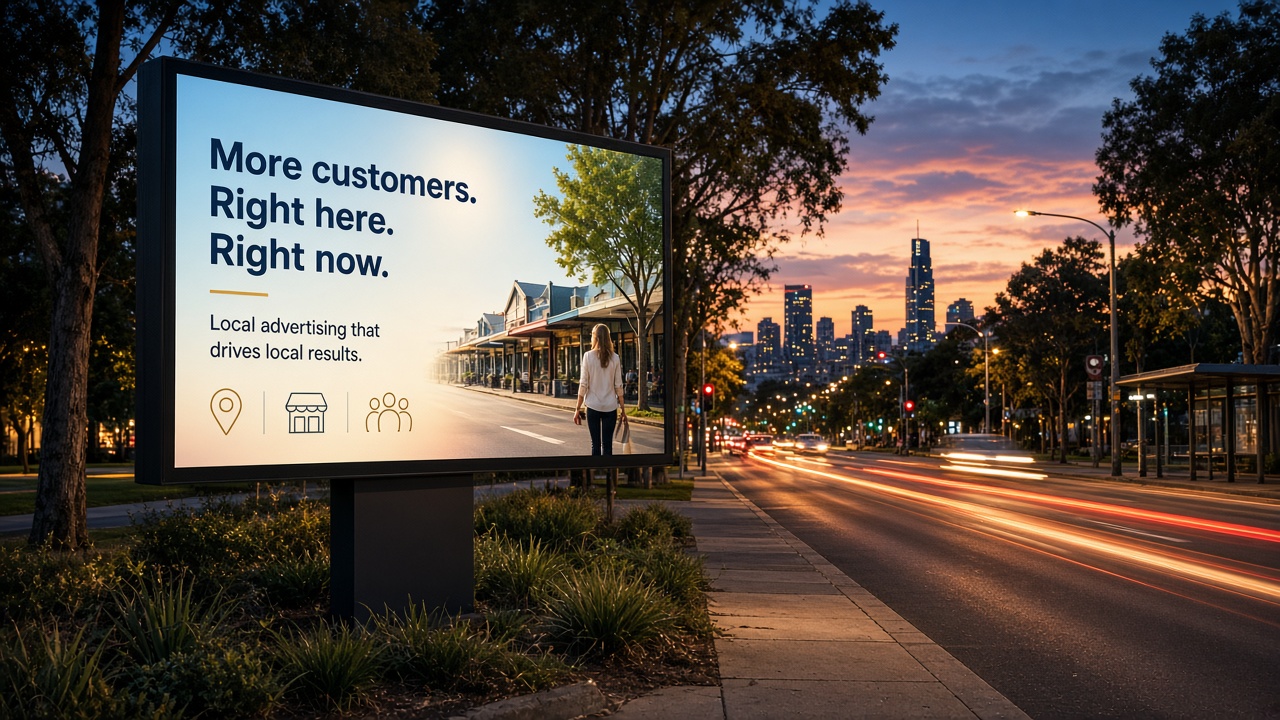
Australian small businesses are under pressure from more than one direction. Social media advertising costs keep climbing, commercial rents remain high, and wage inflation leaves less room for inefficient marketing. In 2026 and into 2027, many owners are asking a practical question: where should the next advertising dollar go if paid social is no longer delivering the same return?
An increasing number of retailers, service businesses and local operators are moving part of their budget from feed-based ads to street-level visibility, especially digital billboard advertising in suburban hubs people already drive and walk through every day.
This is not about abandoning digital. It is about rebalancing spend toward channels that deliver predictable local presence when online costs feel harder to control.
Why Social Media Ads Feel More Expensive
Paid social once looked like the most accessible channel for Australian SMEs. Targeting was flexible, creative was easy to launch, and budgets could start small. Over time, that picture has changed.
Cost-per-click and cost-per-result have risen in many categories as more advertisers compete for the same attention. Audiences see more ads, scroll faster, and trust promotional posts less. Privacy updates have also made tracking and retargeting less precise than they were a few years ago.
For a local café, clinic, tradie, retailer or professional service, that combination matters. You may still get impressions and clicks, but each enquiry can cost more, and the customer may never have been near your catchment in the first place.
When social ad fatigue meets tighter margins, owners look for channels that feel more grounded in real local traffic.
Rising Rents, Wage Pressure and the Visibility Gap
Marketing decisions rarely happen in isolation. Many Australian small businesses are also dealing with higher commercial rents and wage costs. That squeezes the budget available for acquisition.
The irony is that visibility still matters most when competition is fierce and customers are careful with spending. Cutting every awareness channel can make a business harder to notice at the exact moment it needs local demand.
Street-level advertising helps close that gap. Instead of renting attention inside an algorithm, you place your brand on routes where local people already spend time: commute corridors, retail approaches and suburban commercial strips.
What Street-Level Ads Mean for Small Businesses
Street-level ads, in this context, usually means outdoor media that sits in the physical environment: roadside screens, digital billboards and other out-of-home formats close to everyday movement.
For small businesses, the appeal is straightforward:
- Your message appears where customers live, work and travel
- Exposure can repeat across the week as people take familiar routes
- Creative stays visible without depending on a scroll or a click
- Local presence feels tangible in a way feed ads often do not
Digital billboards add another practical advantage. Campaigns can launch without printing delays, and creative can be updated when offers, hours or seasonal messages change. That flexibility matters when budgets are tight and every booking needs to work harder.
If you want the foundations first, see what billboard advertising is and how it works and digital vs static billboards.
Fixed-Cost Local Reach vs Variable CPC
One reason businesses are reallocating spend is predictability.
Social campaigns often run on variable costs. You pay for clicks, results or auction-based delivery that can move week to week. That can work well when efficiency is strong. It becomes stressful when results soften and the same budget buys less.
Digital out-of-home is typically planned differently. You book placements for a period, in defined locations, with a clearer sense of local exposure. The cost structure feels closer to a fixed marketing commitment than an open-ended auction.
For owners managing cash flow carefully, that predictability has value. You know where the campaign will appear, who travels past those sites, and how long the presence will run. Impression delivery is tied to real-world traffic rather than feed competition alone.
That does not make outdoor automatically cheaper in every case. It does make the spend easier to plan beside rent, wages and other fixed obligations. For rate context, compare options using how much billboard advertising costs in Australia.
Why Suburban Hubs Matter
Many Australian customers are not making every purchase in a CBD. Suburban retail centres, arterial roads and neighbourhood service strips still carry daily traffic: school runs, commute routes, weekend shopping and local appointments.
For an SME, those routes are often more valuable than national reach. A mechanic needs drivers from nearby suburbs. A dental clinic needs patients within a practical travel distance. A retailer needs people who can actually visit the store.
Street-level digital screens in those hubs put the brand in front of the right geography. High-visibility placements along familiar corridors can support trust simply by being present repeatedly. Over time, that familiarity can improve drive-to-store behaviour and make later online search feel like a second step, not a first discovery.
When a Budget Shift Makes Sense
Moving money from social to outdoor is not an automatic win. It works best when the business has a clear local catchment and a reason for people to remember the brand between visits.
A shift often makes sense when:
- Most customers come from a defined set of suburbs or corridors
- Social costs are rising while enquiry quality is flat or falling
- You need awareness that supports walk-ins, calls or bookings
- Your offer is simple enough to communicate in a few words and a strong visual
- You can support outdoor with a clear website, phone number or local search presence
It may be less useful when your customers are highly specialised, widely dispersed, or almost entirely online with no local visit path.
The smarter approach for 2026–2027 is usually reallocation, not replacement. Keep the digital channels that still convert. Reduce spend on activity that only buys expensive, low-intent attention. Add outdoor where local presence will strengthen the whole mix.
How to Reallocate Without Killing Digital
A practical transition can look like this:
- Audit social campaigns for cost per enquiry, not just reach or clicks
- Protect search and website assets that convert existing demand, including SEO and Google Ads where they still earn their keep
- Reduce prospecting social spend that is clearly inefficient
- Redirect a defined portion of that budget into a local digital billboard booking
- Align creative: same brand name, offer language and visual identity across outdoor and online
- Measure the full journey (calls, store visits, branded search and form enquiries) rather than outdoor in isolation
Outdoor creates recognition. Digital captures action. When naming and offers stay consistent, people who see your board on the commute are more likely to find you later on their phone.
For channel planning more broadly, see choosing the right marketing channels and Facebook and Instagram advertising for small businesses.
Practical Campaign Setup Tips
Street-level campaigns work best when they stay simple.
Keep one main message per creative. Use large type, strong contrast and a clear brand mark. Add a suburb cue, short URL or phone number only if it remains readable at a glance. Avoid packing the screen with conditions, menus or multiple offers.
Choose locations for audience fit, not vanity. A slightly quieter road that your customers actually use can outperform a high-traffic site outside your catchment.
On digital screens, plan for rotation where useful, such as weekday commute creatives, weekend offers or short promotional bursts, without changing the brand identity every time. That is part of the agile edge of digital billboard advertising.
Finally, prepare the landing experience. If the board builds awareness, make sure your Google Business Profile, website and contact path make it easy to complete the journey.
Frequently Asked Questions
Should Australian small businesses stop using social media ads?
Not necessarily. Social can still work for retargeting, community content and offers that convert efficiently. The point is to stop overfunding campaigns that no longer justify rising CPC when local outdoor could deliver stronger catchment presence.
Are digital billboards only for big brands?
No. Many placements suit local and regional advertisers who need suburban or corridor visibility. What matters is matching the site to your service area and keeping creative clear.
How much budget should move from social to outdoor?
There is no single percentage. Start with the portion of social spend that is underperforming, then test a defined outdoor booking long enough for repeated local exposure. Review enquiry trends, branded search and in-store feedback before scaling.
Can outdoor and social work together?
Yes. Outdoor builds local familiarity; social and search can continue the conversation with detail, offers and conversion paths. Consistent branding across both makes that handoff smoother.
Final Thoughts
Smarter spending in 2026–2027 is less about chasing the newest platform and more about protecting return where customers actually are. For many Australian small businesses, rising social costs, rent pressure and wage inflation make inefficient digital spend harder to defend.
Street-level digital billboards offer a different kind of value: fixed-period local presence, repeated exposure on real routes, and visibility that does not disappear when someone scrolls past an ad.
Used well, they do not replace every online channel. They give local brands a predictable foundation for awareness while digital tools handle the conversion steps that follow.
Media Mart helps Australian businesses explore digital billboard advertising and outdoor advertising options based on audience, location and campaign goals.